Opens the museum's own website. Book on the official site; nothing is charged on this page.
Area
Madrid
Theme
Science & family
The building gives the game away before the collection does. Delicias was a working terminus in the 19th century, an iron-framed hall under a long glass roof, and when the passengers stopped coming the tracks stayed exactly where they were. The Museo del Ferrocarril fills that hall with locomotives and carriages, parked on those rails, close enough to read the maker's plate. Children who have never once looked at a painting will walk the length of it twice. Tickets and current hours come from the museum's own site.
What will you see inside the Railway Museum?
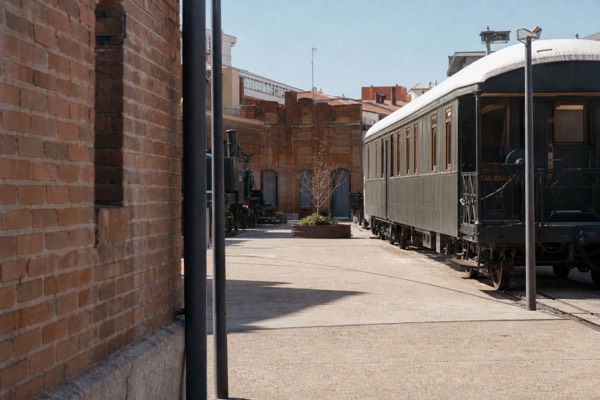
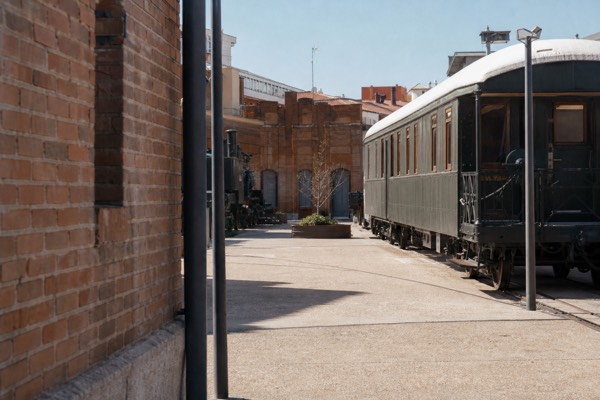
Locomotives, and the hall that holds them. Steam, diesel and electric engines stand on the tracks of the old Delicias station, with carriages parked between them and railway equipment along the edges: signals, clocks, ticket machines, the working furniture of a terminus. The building is half the exhibit.
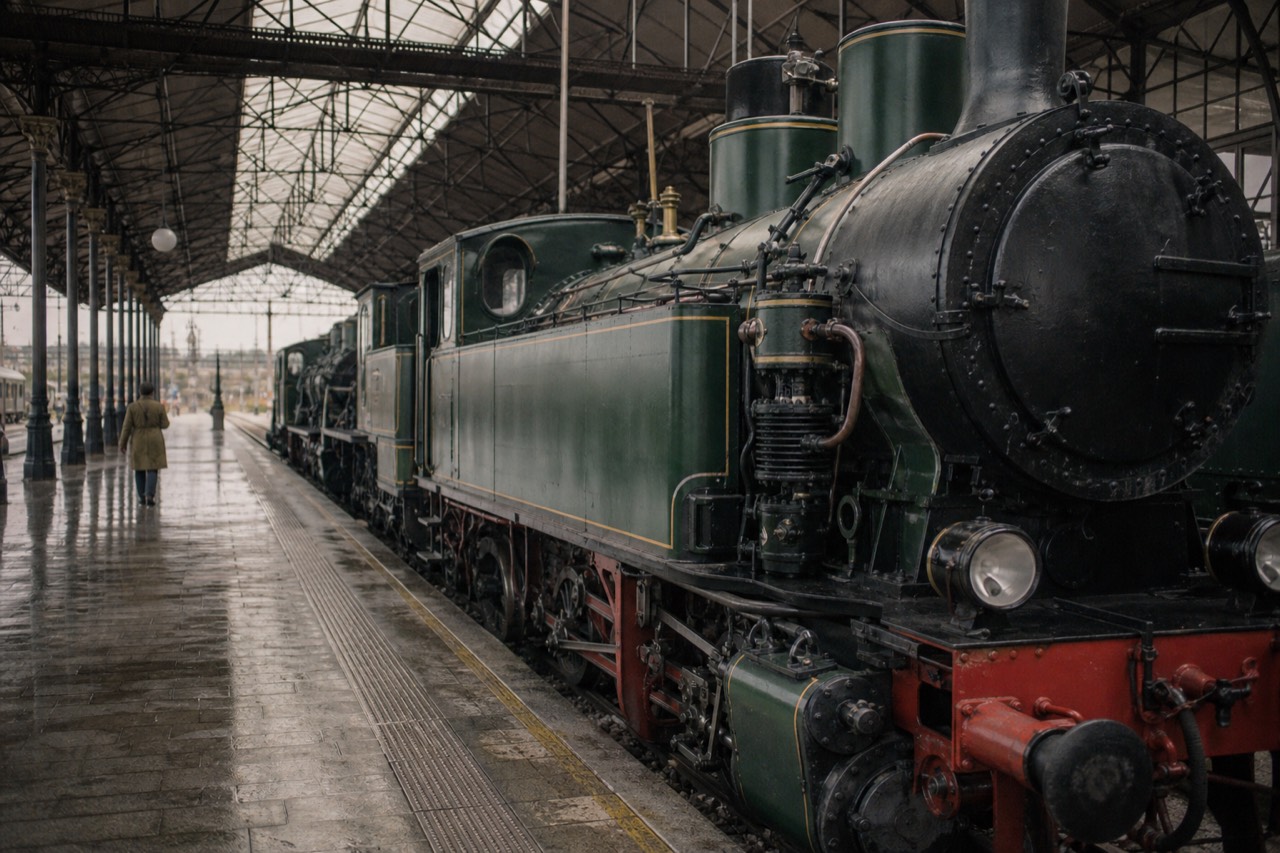
Walk in and the roof does the first bit of work. Iron columns carry a glass span the length of the old platforms, daylight comes down through it, and the rails are still set in the floor where trains once stood waiting. Very few museums let you stand in the space the collection was built for. This one has never had to move.
The steam locomotives are the reason most people come. Up close they are absurd objects: wheels taller than the children looking at them, riveted boilers, connecting rods the size of a leg. Because they sit at ground level rather than up on a plinth, the scale lands properly, and the smell of oil and old metal never quite leaves a shed like this.
The carriages tell a quieter story. Look through the windows at the woodwork, the upholstery, the difference between what one class of passenger paid for and what another got, and a whole social history sits there without a label needing to spell it out. Spain also built its railways to a wider gauge than its neighbours, which shaped its trains and kept them off the rest of Europe's tracks for generations.
Around the edges sit the small things that made a railway run: lamps, signals, telegraph equipment, uniforms, tickets, posters and cases of models. They are worth a slow lap once the engines have been dealt with, and they are where the enthusiasts spend their time.
What you will find
What to look for
Steam locomotives
Wheel height, riveted boilers, the maker's plates
Diesel and electric engines
How quickly the shape of a train changed once steam went
Carriages
Woodwork and upholstery, and the gap between travel classes
Cases of scale models, posters, timetables and uniforms
How do Railway Museum tickets work?
Admission is charged, and the current price sits on the museum's own site rather than on this page, because this is not one of the €3 state museums. A railway foundation runs it, sets its own rates and publishes its own hours. No standing free-entry window is published the way the culture ministry's museums publish theirs.
That is a deliberate gap rather than an oversight. Prices at an independently run museum move without much notice, and a figure printed here would go stale quietly and mislead somebody. The official link on this page goes straight to the source, which is where the current rate, the opening days and any family or reduced tickets are listed.
Two things are worth knowing before you go looking. The museum sells its own admission directly, and the ticket sellers who list Madrid's attractions do not carry a plain entry ticket for it, so there is no bundle or pass to compare. And because the calendar belongs to the foundation rather than to the state museum system, the opening days do not follow the familiar Monday-closed pattern automatically. Check the site, not the habit.
Set against the state museums, the trade is a simple one: they are cheaper and publish free windows, this one gives you a Victorian train shed with the trains still in it.
Museum
Who runs it
Admission
Free entry
Museo del Ferrocarril
A railway foundation
Current price on its own site
None published
Museo Nacional de Ciencias Naturales
The CSIC research council
€7
Sundays 17:00 to 20:00
Museo de América
The culture ministry
€3
Thursday afternoons, Sundays
Museo Arqueológico Nacional
The culture ministry
€3
Saturdays from 14:00, Sunday mornings
How long do you need, and who is it for?
An hour covers it for most visitors, ninety minutes if you read the plates on the engines or came for the railway rather than the day out. Children set the pace, and the pace is slow at the front of a steam locomotive. It is flat, indoors and out of the weather, which makes it a dependable wet-afternoon plan.
The shape of the visit is simple because the building is. Walk the length of the hall down one side, come back up the other, and stop at whatever holds the group. There is no floor plan to work out and no route to get wrong, which is a relief after a morning in a museum with wings and levels.
With young children, this is one of the easier stops in the city. The exhibits are enormous, they sit at eye level rather than behind a distant rope, and nothing about the room asks anybody to whisper. Older children and adults get the historical layer: how a country the size of Spain was stitched together by track, and what that took.
Enthusiasts should give it longer. The rolling stock rewards a proper look, the smaller displays carry the technical detail the engines cannot, and the hall itself is a piece of 19th-century engineering worth studying on its own terms.
Know before you go: where it is and what to check
The museum occupies the former Delicias station, south of Atocha and well away from the Art Walk museums. Tickets, opening hours and closed days are published on the museum's own site, which is the only reliable source for them. Allow an hour, or longer if the trains are the reason for the trip.
The location is the one thing to plan around. Delicias sits south of Atocha, so anyone already at that end of the Paseo del Prado is most of the way there, while visitors based around Sol or Gran Vía have a proper journey rather than a stroll. Going out and back for the museum alone works better as a half-day with something else attached.
Practical points are few, which is part of the appeal. The hall is one large level space, so there are no stairs to weigh up. There is no timed-entry system to plan a day around. And since a privately run museum keeps its own calendar, the opening days are worth confirming before travelling rather than assuming they match the state museums.
At a glance
Detail
Setting
The former Delicias station, a 19th-century iron-and-glass train hall
Where
South of Atocha, away from the Paseo del Prado museums
Admission
Charged; the current price is on the museum's own site
Free entry
None published
Run by
A railway foundation, not the culture ministry
Tickets
Direct from the museum; no plain admission ticket in city bundles
Time to allow
An hour to ninety minutes
Best for
Families with young children, railway enthusiasts, wet afternoons
What can you pair with the Railway Museum?
The Reina Sofía is the nearest major museum, up at the Atocha end of the Paseo del Prado, which makes the pairing obvious for adults. For a second helping of very large objects indoors, the Natural Sciences Museum does the same job with skeletons. The zoo turns either into a full family day.
Heading back north, the Reina Sofía is the natural second stop: 20th-century Spanish art with Guernica at the centre of it. Two things catch people out there, both published on the museum's own site: it closes on Tuesdays rather than Mondays, and it runs free evening hours most days of the week.
If the day belongs to the children, the Natural Sciences Museum up on the Castellana is the closest match to this one in spirit: big objects, real material, seven euros, free on Sunday evenings. Two indoor stops of an hour each beat one long museum morning by a distance.
For something outdoors afterwards, Zoo Aquarium Madrid out in the Casa de Campo fills the rest of a family day, though it is a trip across the city rather than a hop. Madrid's own visitor site, esmadrid.com, keeps the current listings for what is on across the city's museums.
Questions people ask
How much does the Railway Museum in Madrid cost?
It charges admission, and the current price is published on the museum's own site rather than repeated here, since an independently run museum changes its rates without notice. It is not part of the €3 state-museum system, and family or reduced tickets, where offered, are listed on the same page.
Is the Railway Museum ever free?
No standing free-entry window is published for it in the way the culture ministry's museums publish theirs. The museum is run by a railway foundation and sets its own admission policy, so any free days or special openings would be announced on its own site rather than in the state museum calendar.
What is inside the Railway Museum?
Locomotives and carriages, standing on the original tracks of the old Delicias station: steam engines, diesel and electric locomotives, passenger coaches, and the equipment that kept a railway running, from signals and lamps to clocks, telegraph gear, uniforms, posters and cases of scale models.
Is the Railway Museum good for young children?
It is one of the easier museums in the city with small children. The exhibits are enormous and sit at ground level rather than behind distant barriers, the hall is one flat indoor space with no stairs to manage, and nothing about a former train shed demands quiet or careful behaviour.
How long do you need at the Railway Museum?
About an hour for most visitors, ninety minutes if you stop to read the plates on the engines or the smaller technical displays. Railway enthusiasts can spend longer, since the rolling stock and the 19th-century station structure both reward a slow, deliberate look.
Where is the Railway Museum in Madrid?
It occupies the former Delicias station, south of Atocha and away from the Paseo del Prado museums. Anyone already at the Atocha end of the centre is most of the way there; from Sol or Gran Vía it is a proper trip, so it pairs best with something else on that side of the city.
Is the Railway Museum worth visiting?
For families and anyone with a soft spot for engineering, yes. The appeal is not a list of star exhibits but the setting: a 19th-century iron-and-glass terminus with the trains still standing on its rails, at a scale that photographs badly and impresses in person.
Madrid · A full zoo plus aquarium out in Casa de Campo
Madrid's combined zoo and aquarium in the Casa de Campo park, an easy half day with kids. Busy dates genuinely sell through, so holding a slot ahead is worth it.
Madrid · The classic amusement park in Casa de Campo
Madrid's classic amusement park in the Casa de Campo, with rides running from kids' zones to inverted coasters. It pairs naturally with the zoo nearby for a full family day out.