Opens the official listing with live dates and prices. Book there; nothing is charged on this site.
Area
Madrid
Theme
Golden Triangle of Art
Guernica hangs on Floor 2 of the Sabatini Building, in Room 205.10, and for most of its life in this museum nobody was allowed to photograph it. That ended in September 2023, when director Manuel Segade permitted photos without flash, a decision taken to normalise the visit instead of having guards spend the day watching phones. The Reina Sofía is Spain's national museum of twentieth-century art, and in 2025 it drew 1,601,732 people to its main site. Nearly two thirds of them came in on a free slot or a discount.
What will you see inside the Reina Sofía?
The collection runs from the late nineteenth century to the present and is built around Picasso's Guernica, which hangs in Room 205.10 on Floor 2 of the Sabatini Building. Around it sit deep holdings of Dalí and Miró, roughly 25,000 works in total, and a rotating programme of temporary exhibitions across two buildings.
Guernica arrived in Madrid under escort on 10 September 1981 and went on show at the Casón del Buen Retiro behind bulletproof glass. It moved into this building in 1992, when the Reina Sofía opened as the national museum of twentieth-century art, and it has stayed put since. The photography rule changed in September 2023: the phone can come out, with no flash, no tripod and no selfie stick.
The rest of the collection is not a supporting act. It has been assembled since 1894 and now runs to some 25,000 pieces, weighted towards Spanish art with a strong international presence and a particular pull towards Latin America. Dalí and Miró are held in depth. Floor 4 opened in 2026 with a re-presentation of the years from 1975 onward, much of it rarely shown before.
Temporary shows run alongside. Through 2026 the programme carried Felix Gonzalez-Torres: Sweet Revenge to 12 October, Blanca Sánchez in Milk, Snow, Tear, Hand to 9 October, and a dialogue with the South African artist Dumile Feni titled History Doesn't Repeat Itself, but It Does Rhyme. Look at what is hanging before you fix a date.
Two satellite galleries in El Retiro belong to the museum as well, the Palacio de Velázquez and the Palacio de Cristal, both free to enter. The Palacio de Cristal is temporarily closed for works, so treat the park as a bonus rather than part of the plan.
How do Reina Sofía tickets work, and which one should you pick?
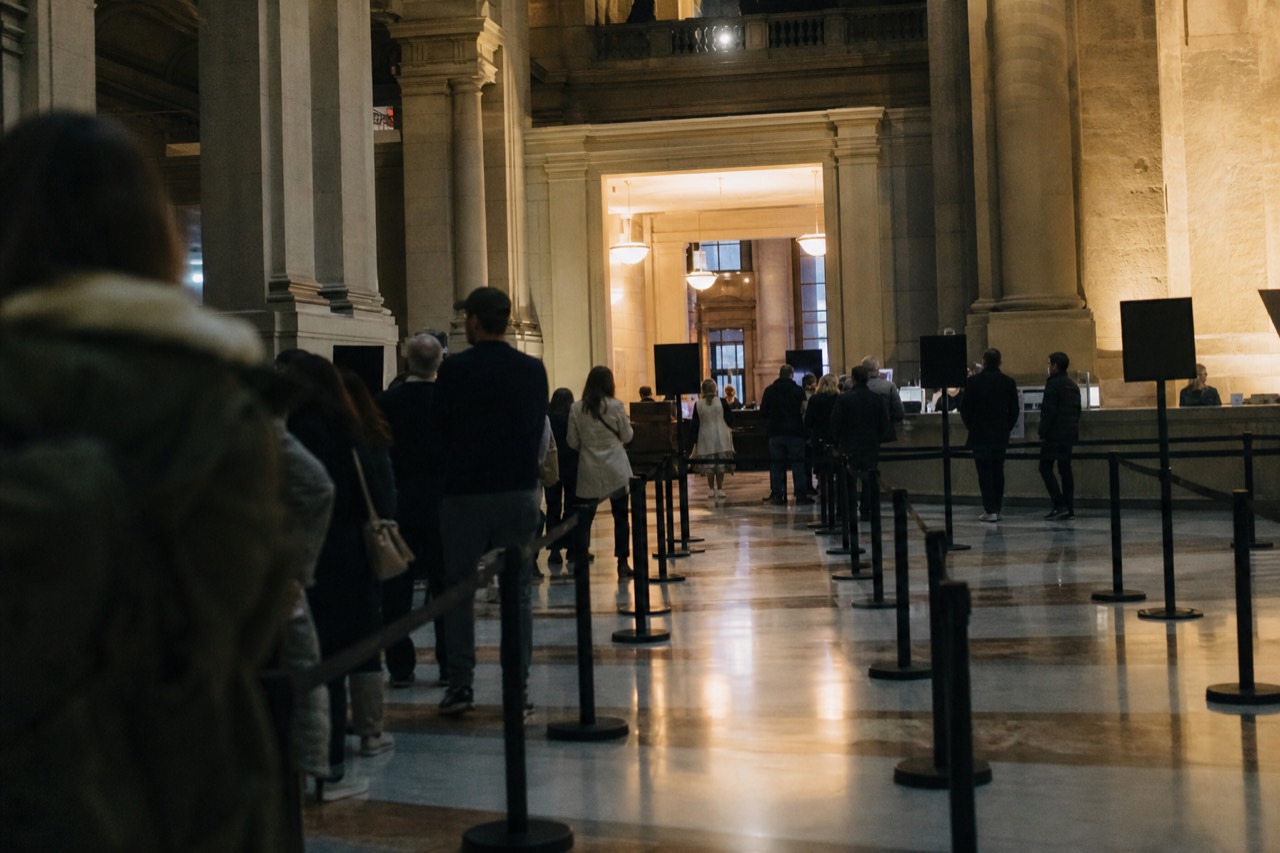
General admission is €12, a combined ticket with the audio guide runs €18 to €19, and an annual ticket that lets you return all year costs €18. Entry is free Mondays and Wednesday to Saturday from 19:00 to 21:00, and Sundays 12:30 to 14:30, but you still need to collect a ticket for those hours.
The free evening is real and it is popular. Of everyone who came through the main site in 2025, 62 per cent entered on a free slot or a discount, and the single busiest day of that year brought 12,380 visitors through the doors. Free access is for individuals only, so groups cannot use it, and there are set free days too: 18 April, 18 May, 12 October and 6 December.
What a paid daytime slot buys is room to stand still. Guernica is quieter at 10:30 than at 19:30, the Floor 4 rehang takes patience, and a timed ticket means the ticket desk is not part of your afternoon. If your dates are fixed, it is worth taking a moment to check availability using the booking panel above.
One practical tip from the museum itself: if you already hold an online ticket, use the Nouvel Building entrance on Ronda de Atocha rather than the Sabatini door. Conditions for the reduced categories and the current programme sit on the official Reina Sofía site.
Ticket
Price
Notes
General admission
€12
Main site, Sabatini and Nouvel buildings
Combined with audio guide
€18 to €19
Audio guide added to admission
Annual ticket
€18
Return visits for a year
Free evening, Mon and Wed to Sat
Free, 19:00 to 21:00
Ticket still issued; individuals only
Free Sunday slot
Free, 12:30 to 14:30
Same terms; the museum shuts at 14:30
Free days in 2026
Free
18 April, 18 May, 12 October, 6 December
Retiro galleries
Free
Palacio de Velázquez; Palacio de Cristal closed for works
Timed entry booked online
Live price on the listing
Fixed slot, no ticket-desk queue
Reina Sofía, Prado or Thyssen: which one if you must choose?
Pick the Reina Sofía if modern and contemporary Spanish art is what you came for, and above all if you want to stand in front of Guernica. Choose the Prado for old masters and sheer depth, the Thyssen-Bornemisza if you want seven centuries covered in one manageable visit. All three sit within a short walk.
The gap between them is wider than the walk suggests. The Prado took 3,513,402 visitors in 2025 against 1,601,732 here and 1,003,455 at the Thyssen-Bornemisza, and it stops at roughly 1900. This museum picks the story up there and runs it through the civil war to the present.
Two museums over two days is the honest advice. Three in a row is a known way to stop seeing anything by mid-afternoon, and the Tuesday closure here breaks the sequence for anyone who planned around a Monday-shut city. If all three are the plan, the Paseo del Arte pass costs €32.80 against €41 bought separately and stays valid for a year.
Museum
Adult ticket
2025 visitors
Free window
Best for
Reina Sofía
€12
1,601,732
Mon and Wed to Sat 19:00 to 21:00; Sun 12:30 to 14:30
Guernica and twentieth-century Spain
Prado
€15
3,513,402
Last two hours every day
Velázquez, Goya and the old masters
Thyssen-Bornemisza
€14
1,003,455
Mondays 12:00 to 16:00; Saturdays 21:00 to 23:00
Breadth in a single visit
Paseo del Arte pass
€32.80
Not applicable
Not applicable
Doing all three within a year
How long do you need at the Reina Sofía?
Two hours covers Guernica, the rooms around it and a decent run through the Spanish moderns. Give it three if you want the 2026 rehang on Floor 4 and a temporary show as well. Galleries clear 15 minutes before closing, so an evening free slot works out closer to 100 minutes than two hours.
A route that holds up: start on Floor 2 of the Sabatini Building while your attention is fresh, since that is where Guernica and the rooms feeding into it are, then work through the Spanish moderns before the light and your patience go. Floor 4 and the years after 1975 come next, and the Nouvel Building carries the temporary exhibitions and the café, which makes it the natural place to stop.
Two things surprise people. The galleries are held at 21 degrees for conservation, so a layer is worth carrying even in August. And storage is tight: lockers are limited and often full, suitcases are not allowed at all, and handbags have to fit inside 40 by 30 by 10 centimetres. Arrive without luggage rather than plan around the cloakroom.
Know before you go: hours, the Tuesday closure and getting there
The main site opens Monday and Wednesday to Saturday from 10:00 to 21:00, and Sundays from 10:00 to 14:30. It closes every Tuesday, which catches out anyone who assumes the city's museums shut on Mondays. There are two entrances: the Sabatini Building on Calle Santa Isabel and the Nouvel Building on Ronda de Atocha.
Beyond the weekly Tuesday closure, the museum shuts on 1 and 6 January, 1 May, 15 May, 9 November and 24, 25 and 31 December. The two spring and autumn dates move with the Community of Madrid's working calendar, so confirm them if your trip lands nearby. Galleries are cleared 15 minutes before the doors shut.
Getting there is easy from anywhere central, and the museum keeps three public cycle parking stations outside its two entrances. From further out, a single Zone A metro ticket runs €1.50 to €2.00 and a ten-trip ticket €7.30. Children under 14 have to be accompanied by an adult throughout.
At a glance
Detail
Address
Sabatini Building, Calle Santa Isabel 52; Nouvel Building, Ronda de Atocha 2
Opening hours
Mon and Wed to Sat 10:00 to 21:00; Sun 10:00 to 14:30
Closed day
Every Tuesday
Closed dates
1 and 6 January, 1 May, 15 May, 9 November, 24, 25 and 31 December
Free hours
Mon and Wed to Sat 19:00 to 21:00; Sun 12:30 to 14:30
Galleries clear
15 minutes before closing
Bags
Handbags to 40 x 30 x 10 cm; no suitcases; limited lockers
Getting there
Zone A single €1.50 to €2.00; ten-trip ticket €7.30
What can you pair with the Reina Sofía nearby?
The two obvious pairings are the other Art Walk museums, both about ten minutes away on foot: the Prado for old masters and the Thyssen-Bornemisza for everything in between. CaixaForum Madrid sits on the same stretch of the Paseo del Prado behind its vertical garden, and El Retiro holds the museum's own park galleries.
For a two-museum day that leaves you standing, do this one in the morning and the Thyssen-Bornemisza after lunch, since it is the smaller collection and the easier afternoon. If old masters are the priority instead, the Prado is ten minutes north up the boulevard. The Paseo del Arte pass covers one visit to each of the three permanent collections and holds good for a year, so a third museum can wait for a later trip.
For something cheaper and shorter on the same walk, CaixaForum Madrid runs rotating exhibitions behind its living wall of plants, and the Palacio de Velázquez in El Retiro shows this museum's own programme at no charge. On a Tuesday, when the main site is shut, those two are the sensible substitutes.
Questions people ask
How much does a Reina Sofía ticket cost?
General admission is €12. A combined ticket with the audio guide runs €18 to €19, and an annual ticket allowing return visits for a year costs €18. Entry is free on Monday and Wednesday to Saturday evenings from 19:00 to 21:00, and on Sunday from 12:30 to 14:30.
Is the Reina Sofía open on Mondays?
Yes. Mondays are a normal day here, 10:00 to 21:00, with the free evening slot from 19:00. It is Tuesday that the museum closes, which is unusual for Madrid and the single most common planning mistake visitors make on this side of the Paseo del Prado.
When is the Reina Sofía free, and do you still need a ticket?
Free hours run 19:00 to 21:00 on Monday and Wednesday to Saturday, and 12:30 to 14:30 on Sunday. You still collect a ticket for those hours, and free access is for individuals rather than groups. Set free days in 2026 are 18 April, 18 May, 12 October and 6 December.
Can you photograph Guernica?
Yes, since September 2023, when director Manuel Segade lifted the ban. Photographs without flash are permitted in front of it, where they were previously refused to almost everyone. Tripods, selfie sticks and other camera stands stay banned throughout the museum, and filming for commercial use needs prior authorisation.
Where is Guernica in the museum?
Room 205.10, on Floor 2 of the Sabatini Building. The painting came to Madrid in September 1981 and was first shown at the Casón del Buen Retiro behind bulletproof glass, then moved here in 1992 when the museum opened as Spain's national collection of twentieth-century art.
How long do you need at the Reina Sofía?
Two hours suits most first visits and covers Guernica, the rooms around it and the Spanish moderns. Three hours lets you add the Floor 4 rehang of art since 1975 and a temporary show. Galleries clear 15 minutes before closing, which shortens the evening free slot.
Is the Paseo del Arte pass worth buying?
It costs €32.80 and covers one visit each to the permanent collections of the Prado, the Reina Sofía and the Thyssen-Bornemisza, against €41 bought separately. The saving is modest, but it stays valid for a year, so it works even if the third museum waits for another trip.
Prado or Reina Sofía, which should you choose?
They answer different questions. This museum owns the twentieth century, with Guernica at its centre, and it closes on Tuesdays. The Prado is the old-master collection and by a wide margin the bigger building. Come here first if modern art is the reason you are in Madrid.
Madrid · Seven centuries of art from one family collection
The third corner of the Paseo del Arte triangle, running from old masters to pop art out of the Thyssen-Bornemisza family collection. Mondays are free at set hours and temporary exhibitions sell by timed slot.
Madrid · Velazquez, Goya and El Greco in Spain's national gallery
Spain's national art museum on the Paseo del Arte, home to Las Meninas and the deepest Goya collection anywhere. The permanent collection opens free in the last two hours of each day, and paid timed entry covers the rest.
Madrid · A collector's mansion museum on Calle Serrano
The private collection of financier Jose Lazaro Galdiano, shown inside his own mansion on Calle Serrano with Goya among the highlights. One of the cheapest paid admissions in the city, and free in the last hour Tuesday to Friday.