Golden Triangle of Art: Madrid's Three Museums, in Order
Three national collections, one boulevard, ten minutes of walking between them. Here is the order that works, what the pass really saves, and the two days of the week that break the whole plan.
 By Elena García, Madrid Museums Specialist & Cultural Guide
Short answer
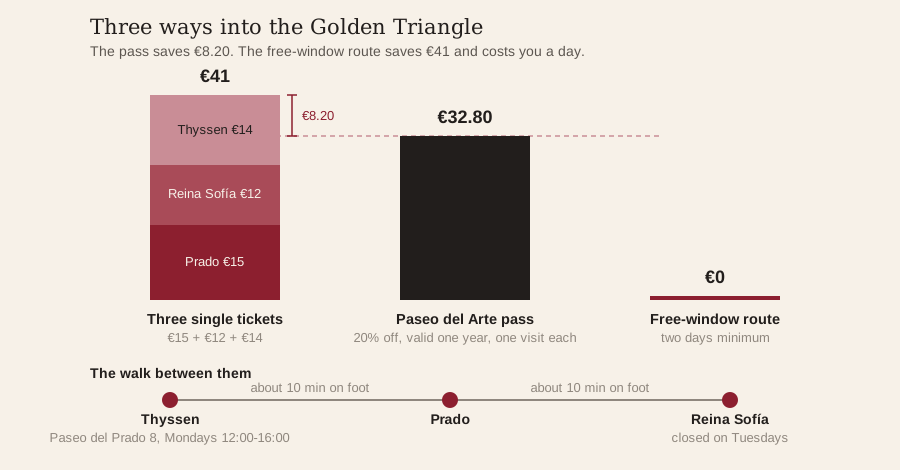
The Golden Triangle of Art is the Prado, the Reina Sofía and the Thyssen-Bornemisza, three museums standing within a ten-minute walk of each other on the Paseo del Prado. Separate tickets cost €41. The Paseo del Arte pass covers all three permanent collections for €32.80 and stays valid a year. The Reina Sofía closes on Tuesdays, which is the day the triangle cannot be completed.
From the steps of the Thyssen-Bornemisza you can see the Prado's north front through the trees. Keep walking south along the same pavement and, about ten minutes later, the Reina Sofía's glass lift towers appear above Atocha. Three of the most visited art collections in Europe, on one street, in walking order. Madrid is the only capital that has arranged itself quite this conveniently, and it is also the reason so many visitors try to swallow all three in an afternoon and remember almost nothing.
The strip has a name, the Paseo del Arte, and a UNESCO World Heritage listing as the Paisaje de la Luz. What it does not have is an obvious order, a single ticket desk, or any warning that one of the three shuts on a different day from the rest. This guide fixes that: the route, the arithmetic, the free windows, and the version of the day that leaves you with energy for the last museum. The rest of the city's collections sit in the wider madrid museums directory.
What is the Golden Triangle of Art in Madrid?
The Golden Triangle of Art is the Prado, the Reina Sofía and the Thyssen-Bornemisza, three national collections standing within a ten-minute walk of one another on the Paseo del Prado. Between them they took 6.1 million visitors in 2025. They divide art history rather than repeat it, which is why the trio works as one visit.
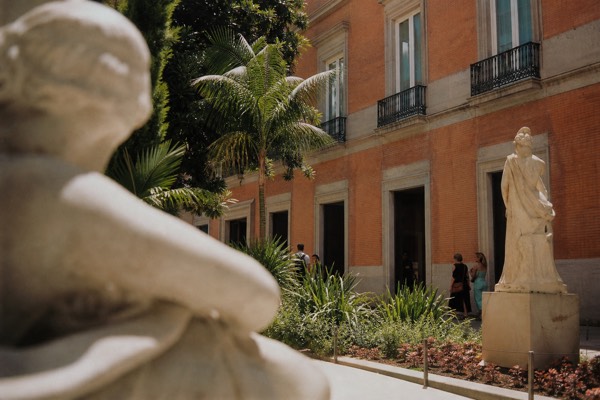
The name is a marketing phrase that turned out to be accurate. Each museum owns a different slice of the timeline, and each fills a gap the others leave. Take the Prado alone and you get almost nothing after 1800. Take the Reina Sofía alone and the story starts in the late nineteenth century with no run-up. The Thyssen, built from one family's collecting rather than a state's, runs straight through from medieval panels to pop art, which is why it works either as an overture or as a summary.
| Museum | Where on the boulevard | Era covered | Official adult ticket | Closed |
|---|---|---|---|---|
| Thyssen-Bornemisza | Paseo del Prado 8, north end | Thirteenth century to pop art | €14 | Open daily, short Mondays |
| Prado | Middle of the boulevard | Twelfth century to about 1800 | €15 | 1 Jan, 1 May, 25 Dec |
| Reina Sofía | South end, by Atocha | 1881 to the present | €12 | Tuesdays |
Scale is the other thing to understand before you plan. The Prado took 3,513,402 visitors in 2025, its third consecutive record and the first time it passed three and a half million. The Reina Sofía's main site took 1,601,732, up 4.2%, and the Thyssen 1,003,455, its second-highest total ever. The Prado therefore carries more than twice the traffic of either partner, which decides where the crowds are and, more usefully, where they are not.
If you would rather read the three side by side before committing, the short version lives on our page answering which three museums they are, and the broader field, including the mansions and academies that hold Goya outside this triangle, is mapped in our guide to the city's art collections.
Does the Paseo del Arte pass actually save money?
Yes, by €8.20. Three separate tickets cost €41 at the door. The Paseo del Arte pass covers one visit to each permanent collection for €32.80, a 20% saving, and stays valid for a year from purchase. It carries no priority entry, so it saves money rather than queueing time, and it is poor value if you plan to use the free windows.
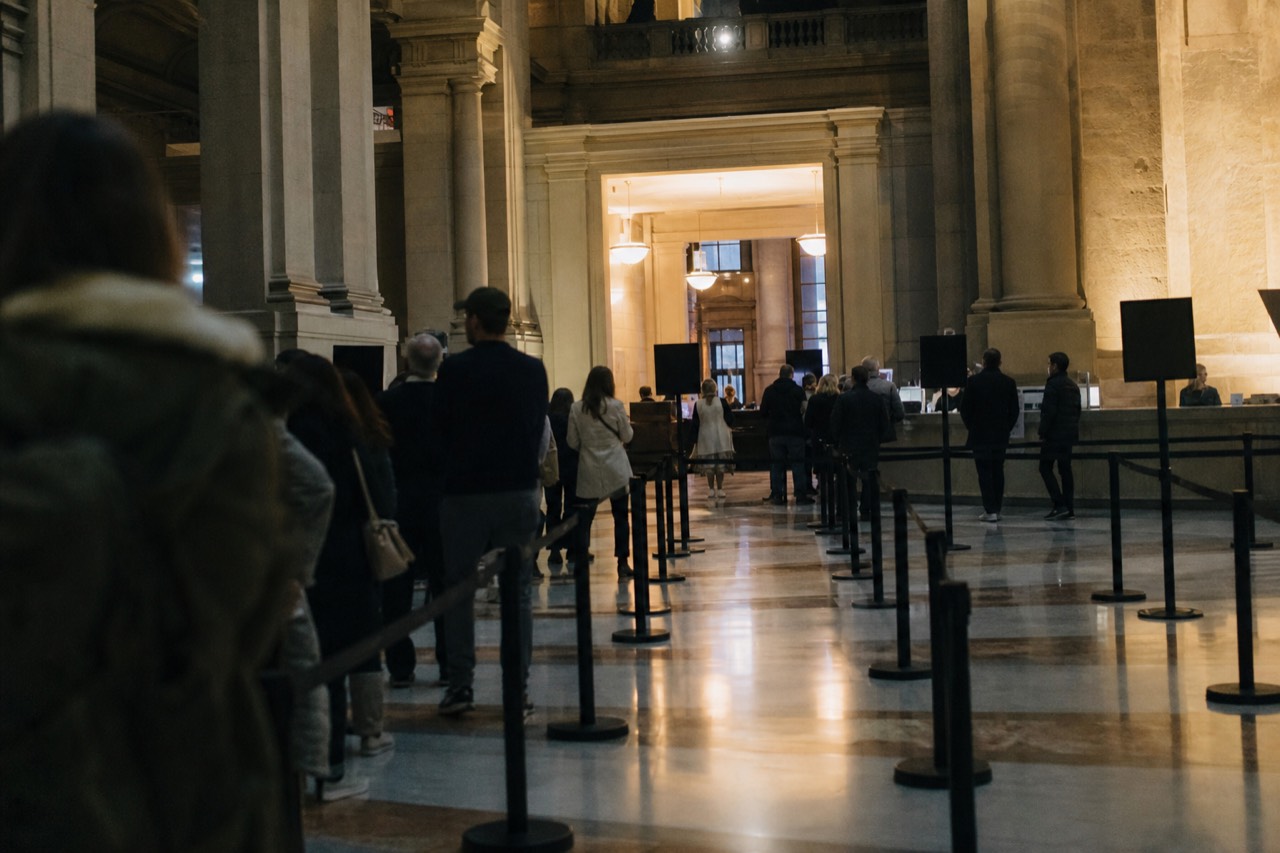
The pass is sold as the Paseo del Arte card, or Art Walk in English, and you can buy it at any of the three ticket desks or online through the Thyssen's own pass page. Its headline is the 20% discount, but its real feature is the one-year validity: buy it on a first trip, use the third leg on a second, and the saving is locked in either way.
| Option | What it covers | Cost | Makes sense when |
|---|---|---|---|
| Three single tickets | One visit each, any hour, no conditions | €41 | You want full control over timing |
| Paseo del Arte pass | One visit to each permanent collection, valid one year | €32.80 | You will definitely do all three |
| Free windows only | The same three collections in two-hour slots | €0 | Your evenings are flexible |
| Booked timed entry | A chosen hour with no ticket-desk queue | from $21, $14 and $16 | Peak season and weekends |
| Two of three, paid | Prado plus one other, full hours | €27-29 | You have one day and want depth |
| Pass plus one free window | Two paid legs, one taken free | €32.80 | You bought the pass and evenings opened up |
The last row is the one most people get wrong. If you already know that one of the three will happen inside a free window, the pass stops paying for itself, because you are buying three legs and using two. On the other hand, if you are in Madrid for two days in high season and want morning visits, the pass is the cleanest option on the table.
Priority entry is where the pass does nothing. On a busy Saturday the pass holder stands in the same line as everyone else, which is why a booked timed slot is a different product solving a different problem. Book Thyssen-Bornemisza entry for a set hour and check the latest dates and prices if your visit falls on a weekend or a public holiday. Anyone weighing the wider city passes as well should read our breakdown of the museum passes.
What order should you visit the three in?
Start at the Thyssen at opening, walk south to the Reina Sofía before lunch, then take the Prado in its free last two hours from 18:00. That runs with the crowds instead of against them and puts the biggest collection at the end, when you can pick rooms rather than trudge. It breaks on Tuesdays, when the Reina Sofía closes.
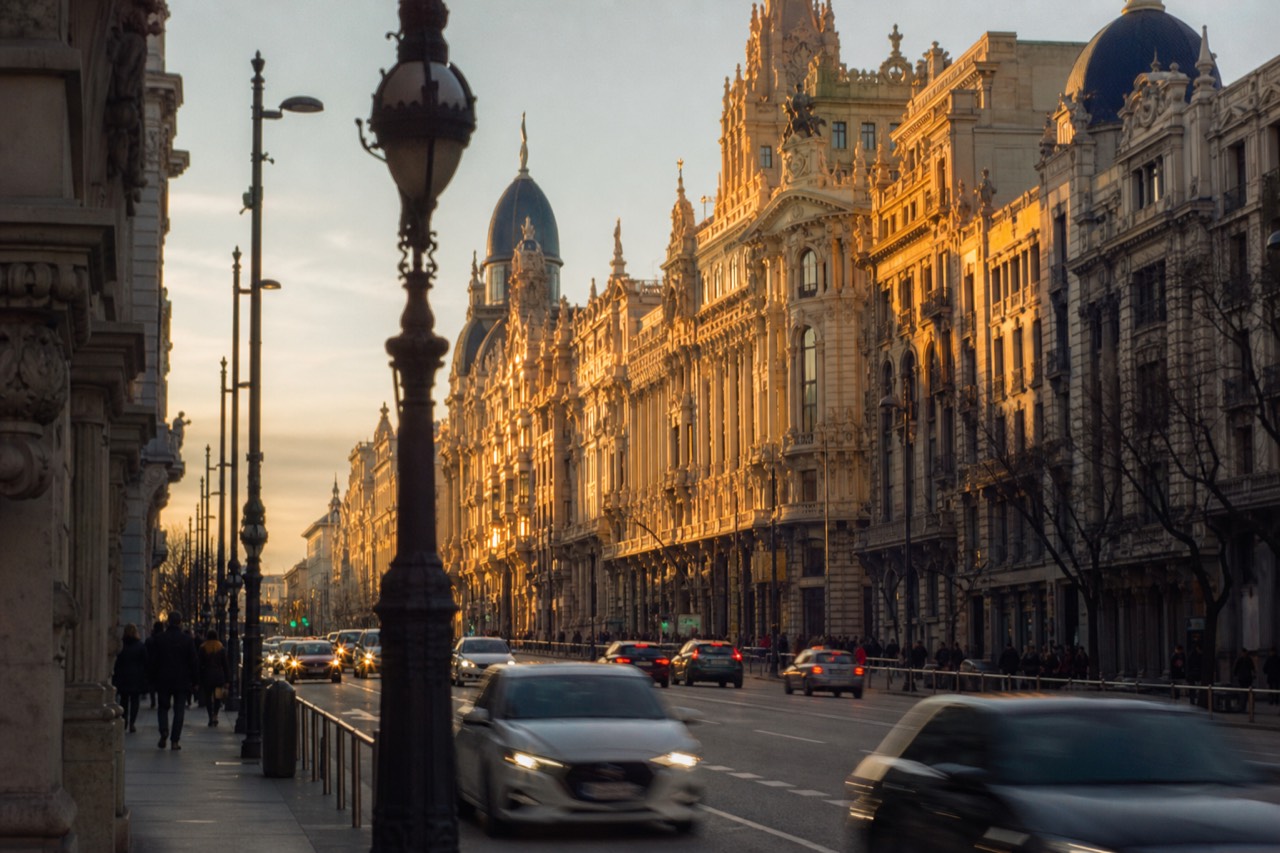
One day for three world-class collections is a compromise, and the way to make it work is to accept that at the start. You are not seeing everything. You are seeing the best forty rooms of three museums, with a long enough break in the middle that the third one still registers.
| Time | Where | What you do | Watch out for |
|---|---|---|---|
| 10:00 | Thyssen-Bornemisza | Top floor down, in order, two hours | Monday hours run 12:00-16:00 only |
| 12:15 | Walk south along the Paseo | About ten minutes, shade on the museum side | Cross at the lights by the Prado's north front |
| 12:30 | Reina Sofía | Guernica first, then the floor around it | Closed Tuesdays, Sundays end at 14:30 |
| 14:45 | Lunch off the boulevard | Ninety minutes, sitting down | The afternoon is longer than you think |
| 16:30 | Retiro or the botanical garden | An hour outdoors | Both are minutes from the Prado |
| 17:45 | The Prado's Goya door | The free window opens at 18:00 | The line forms before the hour |
| 18:00 | Prado | Velázquez, Goya, Bosch, two hours | Entry closes 30 minutes before the museum |
Invert the whole thing if the Prado is the reason you came. Give it a booked three-hour morning when your attention is fresh, take the Reina Sofía free after 19:00, and leave the Thyssen for a Monday afternoon when its permanent collection costs nothing. That version costs less and sees more, at the price of spreading across two days.
The walk itself is part of the day rather than dead time. The whole strip, from the Cibeles fountain down to the Atocha end, is a boulevard with a garden down the middle, and the museums sit on it in the order the timeline runs if you go north to south. Between the Prado and the Reina Sofía you pass the CaixaForum's vertical garden, which is a genuine reason to stop.
Can you do the Golden Triangle for free?
Yes, but not in one day. The Prado is free for its last two hours daily, the Reina Sofía from 19:00 most evenings and Sunday middays, and the Thyssen's permanent collection from midday on Mondays. The Prado and Reina Sofía windows overlap in the evening, so the free version of the triangle takes two days minimum.
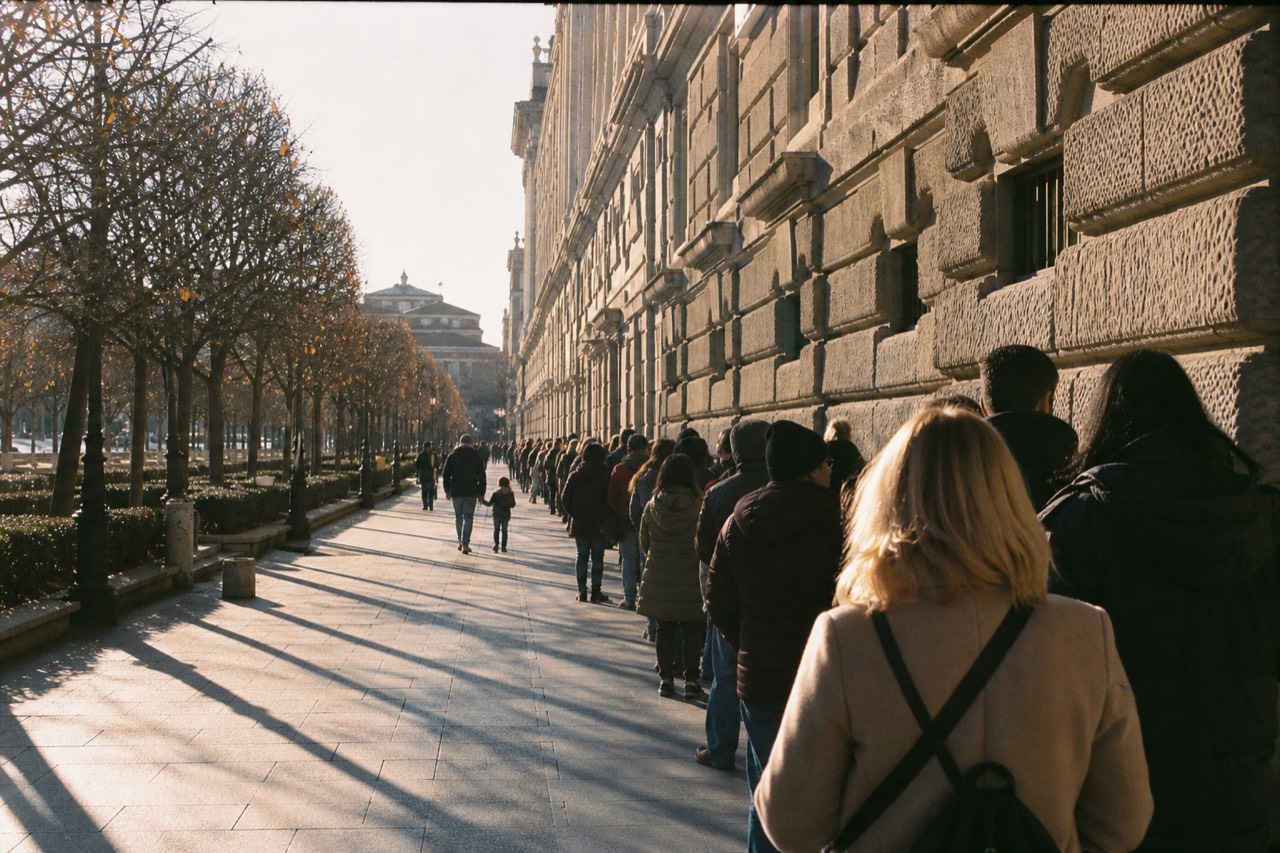
Free entry here is genuinely free rather than discounted, and it is popular enough to have changed the shape of the audience: 62% of the people who entered the Reina Sofía's main site in 2025 came in on a free slot or a discount. The catch is the clock. Two hours is enough for the Thyssen, tight for the Reina Sofía and not enough for the Prado.
| Museum | Free window | What it covers | The catch |
|---|---|---|---|
| Prado | Mon-Sat 18:00-20:00, Sun and holidays 17:00-19:00 | Permanent collection, 50% off temporary shows | The queue starts forming before the hour |
| Reina Sofía | Mon and Wed-Sat 19:00-21:00, Sun 12:30-14:30 | The whole main site | Individuals only, ticket still required |
| Thyssen-Bornemisza | Mon 12:00-16:00 | Permanent collection, sponsor-funded | Mondays only, four hours |
| Thyssen-Bornemisza | Sat 21:00-23:00 | Temporary exhibitions, sponsor-funded | Not the permanent collection |
| Reina Sofía free days | 18 Apr, 18 May, 22 May, 12 Oct, 6 Dec | Full opening hours | Busiest days of the museum's year |
A workable free plan looks like this. Monday: the Thyssen from midday, then the Prado from 18:00. Wednesday or Thursday: the Reina Sofía from 19:00. That is the entire triangle for nothing, spread over two evenings and one long Monday, and it costs three separate queues.
The queue advice is not decoration. Visitors reporting from the Prado's free window this summer are consistent on one point: line up before six if you want the second hour as well, and treat the final hour as air conditioning with paintings in it during a heatwave. Arrive at half past six and a third of your free entry is already gone.
What are the opening hours and entry rules for each?
The Prado runs 10:00 to 20:00 Monday to Saturday and closes at 19:00 on Sundays. The Reina Sofía opens 10:00 to 21:00 except Tuesdays, with Sundays ending at 14:30. The Thyssen opens daily from 10:00 to 19:00, with short Monday hours. All three stop admission before closing time.
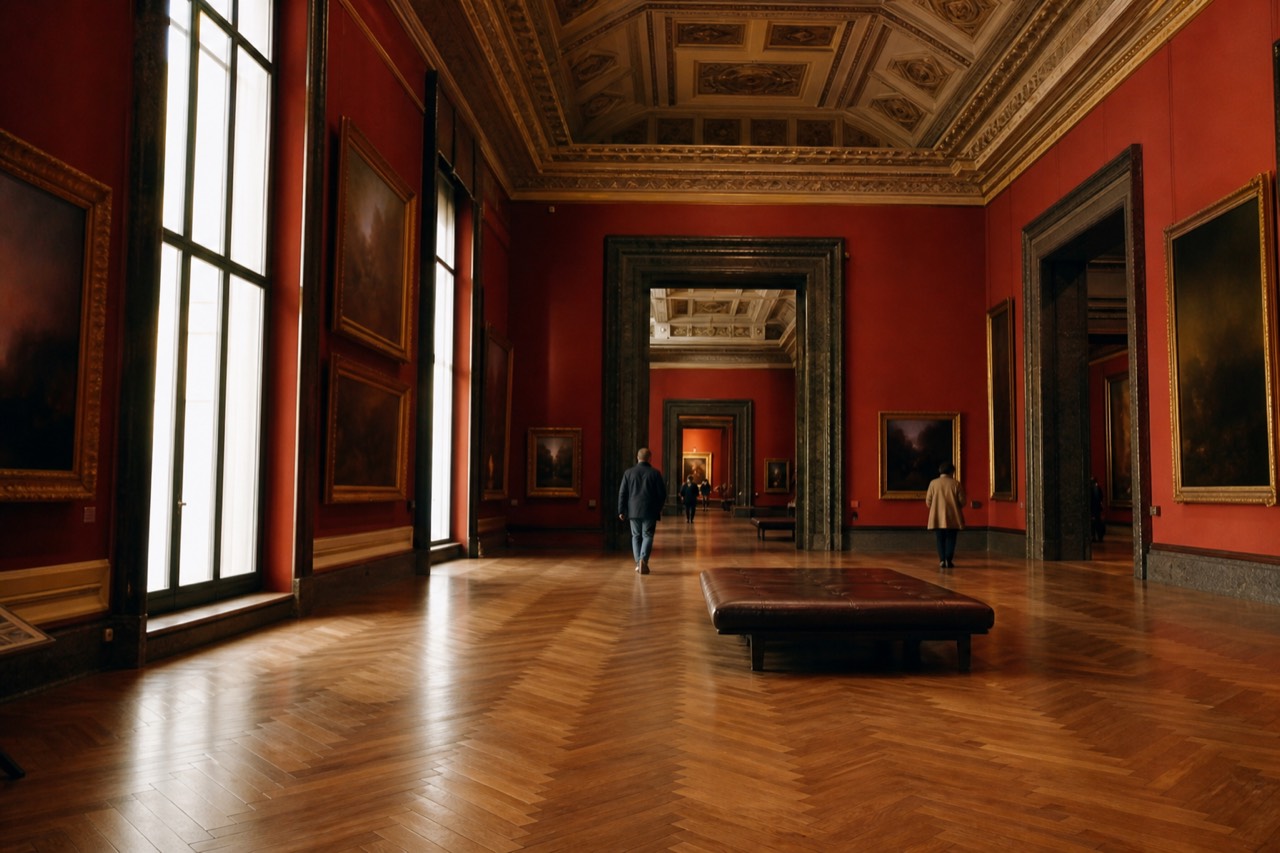
The details in this table are the ones that cost people visits. Last admission is not closing time, galleries empty before the doors do, and the Reina Sofía turns visitors away at the door for bags that would be fine anywhere else in the city.
| Museum | Opening hours | Last admission | Entry rules that catch people |
|---|---|---|---|
| Prado | Mon-Sat 10:00-20:00, Sun and holidays 10:00-19:00 | 30 minutes before closing | Ticket desk from 9:45, galleries emptied 10 minutes early |
| Reina Sofía | Mon and Wed-Sat 10:00-21:00, Sun 10:00-14:30, closed Tue | Check on the day | Bags over 40 x 30 x 10 cm refused, no suitcases, galleries emptied 15 minutes early |
| Thyssen-Bornemisza | Daily 10:00-19:00, Mondays 12:00-16:00 | Check on the day | Temporary exhibitions run on timed slots |
Two practical notes. The Reina Sofía keeps its galleries at a constant 21ºC for conservation, so in July you walk in from thirty-eight degrees and want a layer within twenty minutes. And if you have already bought online, its own advice is to enter through the Nouvel building on Ronda de Atocha rather than the Sabatini entrance, which is where the ticket queue forms.
The Prado's paid extras are worth knowing before you decide what a visit costs. The audio guide adds €5 and covers more than 250 works in fifteen languages. A guided tour of the collection highlights adds €10, runs about ninety minutes, and goes out in English at 11:00 and 13:00. Both are booked on top of admission rather than instead of it, and the museum's visitor page lists the current times.
What should you actually look at in each one?
Give the Prado to Velázquez and Goya, the Reina Sofía to Guernica and the rooms that explain it, and the Thyssen to a single walk from the top floor down. Trying to see everything in all three is how people end up remembering none of it. Twenty-four works across the three are enough for a first visit.
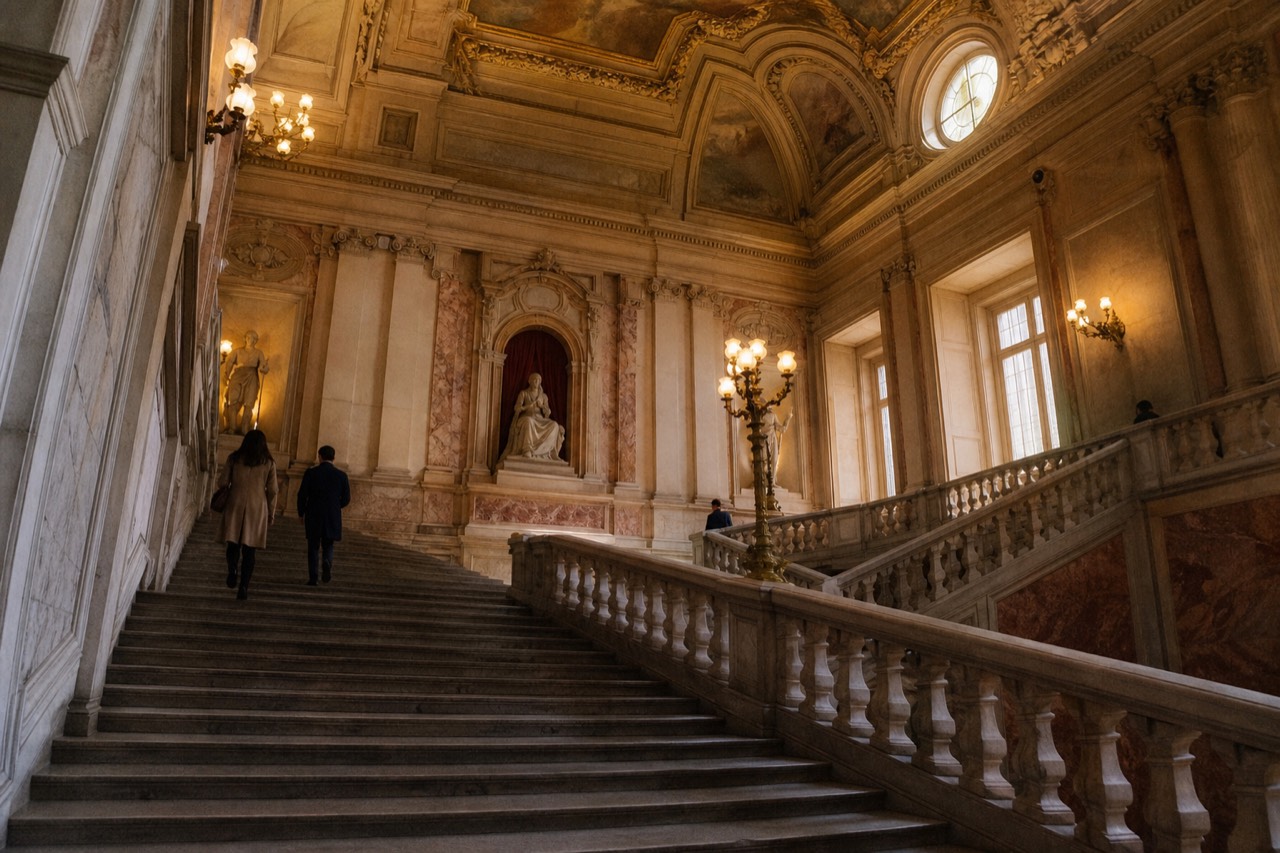
That number is not arbitrary. Madrid's own tourist board runs an Essential Art Trail app built around exactly 24 works across the three museums, which is a sane target for a first pass and about as much as most people hold in their heads. You can download the city's Essential Art Trail app before you go and treat it as a spine rather than a script.
| Museum | Go for | Where it sits | Time to allow |
|---|---|---|---|
| Prado | Las Meninas, the Goya rooms, Bosch's triptych | Villanueva building, main floors | Three hours, more if you can |
| Reina Sofía | Guernica and the surrounding rooms | Room 205.10, Sabatini building, floor 2 | Two hours |
| Thyssen-Bornemisza | The chronological walk, medieval panels to pop art | Top floor down through three levels | Two hours |
| Colecciones Reales | Velázquez, Goya and Caravaggio from the royal collections | Beside the Royal Palace, ten minutes by Metro | Ninety minutes |
The Reina Sofía also rewards a second lap that most visitors skip. Its permanent collection runs to almost 25,000 works, and floor four reopened in 2026 with a re-presentation weighted towards 1975 onwards, so there are rooms there that were not on show even a couple of years ago. If Guernica is the whole reason you are going, our guide to seeing it properly covers the room, the rules and the history behind the canvas.
When the triangle is done and you still have an afternoon, the fourth stop is not on the boulevard at all. The Galería de las Colecciones Reales opened in 2023 beside the Royal Palace to show what Patrimonio Nacional had been keeping out of sight, and it runs on capacity-capped slots, so it is quiet in a way the Prado never is.
What can you add on when the three are done?
Half a day is enough for one add-on. The Galería de las Colecciones Reales is the strongest, the Real Jardín Botánico is the cheapest reset, and CaixaForum's rotating shows sit between the Prado and the Reina Sofía. All three are within walking distance or one Metro stop of the boulevard.
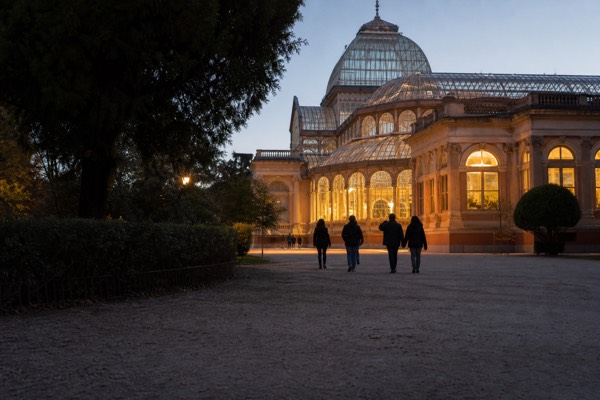
The mistake after a triangle day is booking a fourth big collection. What actually works is something shorter, cheaper and different in kind, which is why the botanical garden beside the Prado does more for a tired afternoon than another gallery would.
| Add-on | Why it works here | Cost | Time |
|---|---|---|---|
| Galería de las Colecciones Reales | Royal-collection paintings in a purpose-built museum, quiet slots | from $21 | Ninety minutes |
| Real Jardín Botánico | A green pause directly beside the Prado | from $9 | An hour |
| CaixaForum Madrid | Rotating exhibitions behind the vertical garden, on the same boulevard | €6 at its own desk | An hour |
| Retiro park | Free, and the Palacio de Velázquez inside it shows Reina Sofía exhibitions for nothing | Free | As long as you like |
The Real Jardín Botánico is the one to keep in reserve. It shares a wall with the Prado, costs less than any museum ticket on this page, and forty minutes under the trees between two collections is the difference between looking properly at the second one and drifting through it.
For a plan that spreads all of this across two or three days rather than one, including the free windows for the museums outside this triangle, see our free-entry hours in full.
What do people ask before doing all three?
Most of it comes down to four facts: the pass costs €32.80 against €41 separate, the Reina Sofía closes on Tuesdays, the Prado's free window runs the last two hours of every day, and one day is enough for the triangle only if you accept seeing the highlights rather than the collections.
Can you do the Golden Triangle in one day?
Yes, if you start at opening and accept a highlights visit at each. Two hours at the Thyssen, two at the Reina Sofía and two at the Prado, with a long lunch in the middle, is a full but workable day. It does not work on a Tuesday, when the Reina Sofía is closed, and it is uncomfortable on a Monday, when the Thyssen opens only from midday to four.
Which of the three museums should you see if you only pick one?
The Prado. It holds Las Meninas, the deepest group of Goyas anywhere and major El Greco, Bosch, Titian and Rubens holdings, and no other collection covers that ground. If your interest is modern art rather than old masters, take the Reina Sofía instead, and if you want the whole arc of European painting in two hours, take the Thyssen.
How long is the walk between the three museums?
About ten minutes between each, along one continuous boulevard with a garden down its centre. The Thyssen sits at Paseo del Prado 8 at the north end, the Prado in the middle, and the Reina Sofía at the southern end by Atocha station. Walking north to south also follows the chronology, which is a neater way to do it than doubling back.
Is the Paseo del Arte pass worth buying?
It saves €8.20 against three separate tickets, a 20% discount, and stays valid for a year from purchase, so it can be split across two trips. It carries no priority entry. Skip it if you plan to take any of the three inside its free window, because you would be paying for a leg you will not use.
Do you need to book the three museums in advance?
The Prado in high season, yes, because its timed slots go early and the door queue is real. The Thyssen benefits from booking when a big temporary exhibition is running, since those work on timed entry. The Reina Sofía is the most walk-up friendly of the three outside its free hours. Free windows cannot be reserved at all.
Which day is worst for the Golden Triangle?
Tuesday, because the Reina Sofía closes and the triangle cannot be completed. Monday is the second-trickiest: the Thyssen opens only from 12:00 to 16:00, though that window is free. The best single day is a Wednesday or Thursday, when all three keep full hours and both evening free windows are open.
Can you see all three museums for free?
Yes, over at least two days. The Thyssen is free from 12:00 to 16:00 on Mondays, the Prado for its last two hours every day, and the Reina Sofía from 19:00 on Mondays and Wednesday to Saturday, plus Sunday from 12:30 to 14:30. The Prado and Reina Sofía windows overlap in the evening, which is why one day cannot cover all three.